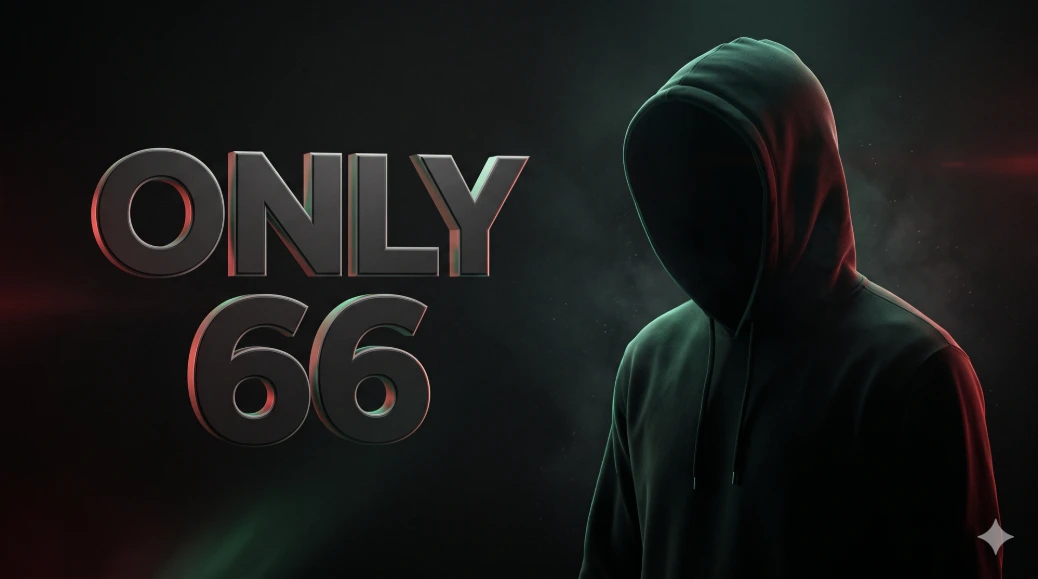
Standard creator advice treats upload volume as the single biggest driver of early channel growth. Beginners are routinely told to publish three long-form videos a week, post daily Shorts, and wait for the algorithm to reward their consistency. DecodingYT, built by Indian creator Adarsh Arijit Kashyap, proves the exact opposite playbook: search-first efficiency powered by evergreen content that compounds for years.
Launched on January 13, 2023, the faceless YouTube channel crossed 1,000,000 subscribers in January 2026 with only 51 uploads. By October 2026, the channel reached 1.18M–1.2M subscribers and 79.0M–79.89M lifetime views across just 65–66 long-form videos—averaging 1.2M views per video and 68 lifetime views per subscriber with 0% YouTube Shorts, according to public channel data from vidIQ and OutlierKit. According to OutlierKit's July 2026 Strategy Teardown, subscriber benchmarks across 20 major niches show the median active channel holding fewer than 35,000 subscribers. Scaling past 1.18 million subscribers while publishing roughly 1.8 videos per month makes DecodingYT one of the sharpest examples of high-leverage content production in the creator economy.
This case study examines what Kashyap executed, why the underlying mechanics worked, and what actionable frameworks creators can extract across four operational pillars: cold-start trend-jacking, search-compounding topic clusters, mobile-first retention engineering, and B2B SaaS monetization.
The Pre-Launch Foundation and Cold-Start Catalyst (2017–2023)
Five Years of Invisible Iteration Before "Overnight" Viral Traction
On the surface, DecodingYT looked like an instant breakout: the channel qualified for YouTube Partner Program monetization within 30 days of its first upload. In reality, Kashyap (born October 11, 2004, in India) spent five years practicing in obscurity before launching the brand. He started his first channel in 2017 at age 13 and spent the period from 2018 to 2022 uploading 150 to 180+ face-cam videos on an older channel that stalled out inside a tiny niche.
During those five years of trial and error, Kashyap kept a handwritten tactical swipe notebook breaking down how leading YouTube strategists—specifically Paddy Galloway, Brian G. Johnson, Film Booth, SunnyV2, and Indian creator Algrow—hooked viewers and structured their scripts. Right as his Class 12 (PCM science) board exams ended, he created DecodingYT as a college side hustle. His initial target was modest: earn ₹2,000–₹3,000 ($25–$35) a month so he could cover his own mobile data, travel, and snack expenses without asking his parents. As a backup plan, he also built a Fiverr profile to sell thumbnail design services—an account he never needed to use once his first uploads took off.
In his viral breakdown Why 99% channels will never grow on YouTube (3.51M views), Kashyap highlights a widespread analytical mistake: observers confuse a creator's first video on a new channel with their first video ever. Because Kashyap already had 150+ reps in scriptwriting, vocal delivery, and visual pacing, his debut upload on DecodingYT skipped the rough beginner stage that causes YouTube's impression-testing system to bury new creators. Opening a brand-new channel allowed the YouTube algorithm to score his sharpened production skills on a clean slate, free from the inactive subscribers and low click-through rates of his old channel.
Creators building from zero can extract three core frameworks from Kashyap's pre-launch years:
Separate skill acquisition from asset building by treating your first 50 to 100 uploads as a low-stakes training ground to master audio clarity, storytelling, and editing pacing before expecting viral scale.
Maintain a dedicated swipe notebook documenting proven intro hooks, retention bridges, and thumbnail layouts from top performers in your vertical so every new script builds on tested mechanics.
Launch a clean channel when pivoting whenever years of early experimentation leave an existing account weighed down by dead subscribers and muddled audience signals.
Solving the Zero-Subscriber Paradox via Calculated Trend-Jacking
Every new education channel runs into the same credibility paradox: viewers scrolling the home feed will not click a video titled "How to Get More Views" from a creator with 12 views. Rather than opening with generic tips, Kashyap published his debut video on March 21, 2023, titled How @Algrow Dominates YouTube : His SECRET to Beat the YouTube Algorithm (888.2K+ views), and followed it with two more analytical breakdowns of established Indian creators.
That target selection solved his cold-start problem overnight. At the time, Algrow had roughly 400,000 subscribers and had pioneered fast-paced motion-graphic editing in India's YouTube growth space. By centering his debut title, tags, and thumbnail on Algrow's four-step formula—and holding an initial click-through rate (CTR) above 11% for two straight weeks—Kashyap tapped directly into YouTube's collaborative filtering graph. Seven days after upload, impressions surged as YouTube recommended the video across the homepages of Algrow's existing fans. Those first three trend-jacking uploads brought in DecodingYT's first 5,000 subscribers, unlocked full monetization on video #4 within 30 days, and pushed the channel past 10,000 subscribers by video #7.
The video converted casual clickers into loyal subscribers because Kashyap didn't just describe Algrow's tactics—he executed them inside the video itself. At the 12-second mark, he deployed Algrow's "end-reward payoff" technique (telling viewers that tip #4 was his personal favorite so they had to stay until the final minute) while matching the crisp visual storytelling Algrow's audience expected. To apply this cold-start launch sequence:
Execute a 3-video authority-borrowing launch by dedicating your first three uploads to deep analytical teardowns of the biggest creators or breakout trends in your niche, capturing pre-qualified browse-feed traffic.
Prove your skill inside the execution by applying the exact retention mechanics you are analyzing directly within your own script and timeline edit.
Pivot from trend-jacking to evergreen search immediately after crossing 5,000 to 10,000 subscribers so your channel builds independent topical authority instead of depending on other creators' names.
Search-First Content Strategy and Catalog Architecture
The 92/8 Evergreen-to-Trend Split and Multi-Year View Compounding
Across 65–66 uploads over 3.7 years, DecodingYT has maintained a 100% long-form video strategy with an average runtime of 14 minutes and 34 seconds. According to OutlierKit, 92% of the catalog consists of evergreen search tutorials, while only 8% uses trend-jacking or seasonal resets. Because each upload requires a full week of solo production, Kashyap avoids short-lived platform news updates. Instead, he targets permanent creator questions such as How to Write Perfect TITLE, DESCRIPTION, TAGS for More Views on YouTube! (3.2M views) and 9 Important YouTube Settings You Must Turn ON (3.4M views).
The math behind a low-frequency channel depends entirely on long-tail search compounding. A creator posting 1.8 times a month cannot survive if each upload dies after 48 hours. While a video about a minor YouTube update spikes for a few days and flatlines once the news goes stale, Kashyap revealed in How I Got 1M Subscribers with Only 51 Videos that his July 2023 tutorial on titles, descriptions, and tags still pulled in over 1,000 views every single day nearly three years later. Five of DecodingYT's top ten videos are two to three years old and still compounding, allowing passive search traffic to generate 2.97M–3.58M monthly views during the multi-week stretches between new uploads.
To replicate this search-compounding catalog architecture:
Pass every topic through a strict 3-gate filter before scripting: the idea must have multi-year evergreen longevity, appeal to a broad total addressable audience (skipping narrow post-monetization topics like "how to enable channel memberships" that only apply to a tiny fraction of viewers), and show verified search demand or competitor outlier velocity.
Refresh evergreen winners with annual roadmap guides—such as How to Start & Grow a YouTube Channel in 2026 (FULL COURSE) (3.4M views) and 10 Best YouTube Channel Ideas to Start in 2026 & 2027—to capture predictable New Year search surges without reinventing your core curriculum.
Balancing Audience Breadth with the CCN Framework and the "3-Video Rule"
As educational channels grow, they usually hit a ceiling: either their content becomes too advanced for beginners, or too basic for long-time fans. Kashyap solved this tension by pairing Paddy Galloway's CCN (Core, Casual, New) framework with Algrow's "3-Video Rule".
When packaging a video like ChatGPT Secrets to Go VIRAL on YouTube | FULL COURSE 2026 (1.1M views), Kashyap designs the concept to satisfy all three audience segments at once:
New Viewers (strangers to the channel) click out of broad curiosity about using AI to grow on YouTube.
Casual Viewers (occasional watchers) click looking for practical workflow shortcuts to make better videos faster.
Core Viewers (die-hard subscribers who already use ChatGPT) click specifically to copy the exact custom prompts DecodingYT uses.
Alongside CCN, the 3-Video Rule acts as an algorithmic circuit breaker. If a viewer skips three consecutive uploads from a channel—for example, two 9/10 or 10/10 underperformers followed by a third miss—YouTube's recommendation system assumes the viewer has lost interest and stops pushing future uploads to their homepage. To prevent a three-video slump, Kashyap keeps a dedicated "Outlier Emergency Page" in his notebook filled with high-probability viral ideas, deploying one immediately whenever two back-to-back videos underperform.
Creators can put both mechanisms into practice immediately:
Frame your packaging for New and Casual viewers while scripting for Core viewers so your title and thumbnail cast the widest possible net while your internal script depth rewards experienced fans.
Maintain an Outlier Emergency Bank of 3 to 5 pre-validated, mass-appeal video concepts and trigger one automatically whenever two consecutive uploads rank 9/10 or 10/10 in YouTube Studio.
Topic Cluster Ownership and Proof-of-Work Packaging
Every upload on DecodingYT focuses on a single subject—YouTube creator growth—turning a 65-video catalog into an interconnected knowledge base across six core topic clusters tracked by OutlierKit:
| Topic Cluster | Upload Count | Flagship Breakout Video & Performance Multiple |
| YouTube Growth Strategy & Algorithm Hacks | 22 | Why 99% channels will never grow on YouTube (3.51M views; 3.8×–10.11× outlier) |
| Thumbnail Design & Title Optimization | 12 | How to Write Perfect TITLE, DESCRIPTION, TAGS for More Views! (3.2M views; 3.6× median) |
| Niche-Specific Playbooks (Gaming & Shorts) | 11 | How to Upload YouTube Shorts Like a PRO in 2026 (1.9M views; 2.0× median) |
| Mobile Video Editing & Voiceover Production | 10 | Start Editing Like This & Make Your Videos 10X BETTER! (2.8M views) & Record Professional VOICEOVER in Mobile! (2.6M views) |
| AI Tools & Faceless Channel Automation | 8 | Make FACELESS YouTube Videos with AI (2.4M views; 2.7× median) |
| Creator Q&As & Personal Milestones | 2 | DecodingYT QnA (605.3K views) & 1M Special QNA (363.0K views) |
Owning an entire topic cluster means any viewer who discovers DecodingYT through a mobile voiceover guide automatically becomes a warm lead for his thumbnail design, upload settings, and AI automation tutorials. To win the click across those clusters, Kashyap leans on proof-of-work titles—turning his own analytics into high-authority headlines like How I Got 10K Subscribers (with ONLY 7 Videos)! (his #1 all-time video at 4.22M views and 4.8× channel median) and How I Got 500K Subscribers with ONLY 30 Videos (414.9K views).
Visually, Kashyap follows a strict subtractive thumbnail design philosophy: strip away every decorative element until nothing else can be removed without losing the core message. He locked in four brand colors (a pitch-black background, white and neon-green text, and YouTube-red accents) and a single bold typeface that he changed only once in over three years. As competitors copied his flat 2D look, he evolved into story-driven 3D thumbnails—such as stamping "NOOB" across a complicated editing timeline to challenge viewer assumptions, or adapting Michelangelo's Creation of Adam to visualize abstract storytelling.
To apply this packaging system:
Turn real milestones into proof-of-work titles using the "How I Got [Specific Result] with ONLY [Small Input]" formula whenever your efficiency beats industry norms.
Build complementary title-and-thumbnail pairs where the title states the viewer's pain point and the thumbnail visualizes a contrarian twist or unfinished story, rather than repeating the same text in both places.
Lock in a 3-color brand palette and one signature font across every upload to cut viewer decision time on the home feed down to milliseconds.
Production Mechanics and Retention Engineering
The Mobile-First Production Moat (0 to 600K Subscribers on a Smartphone)
What separated DecodingYT from Western YouTube educators wasn't just his curriculum—it was the hardware he used to build it. From zero all the way to 600,000 subscribers, Kashyap edited 100% of his videos on a mid-range smartphone (first a Samsung Galaxy A50, then a Samsung Galaxy A52s 5G) using mobile apps InShot, Alight Motion, and PixelLab. He recorded the voiceovers for his first five uploads directly into his phone's built-in microphone before upgrading to a $10 Boya BY-M1 lavalier mic. Only after passing 600,000 subscribers did he transition to an ASUS TUF A17 gaming laptop, Adobe After Effects, and a Sennheiser Profile USB microphone—and even past 1.18 million subscribers, he still edits every frame solo without hiring an editor.
Three years ago, aspiring South Asian creators widely assumed that documentary-grade motion graphics required an expensive PC and Adobe Premiere Pro. By producing slick, PC-level animations on an Android phone—and publishing 30-minute timeline breakdowns like Learn Viral 3D Editing on Mobile | Alight Motion for Beginners (1.2M views) and How to Edit Like a Pro | Advanced Video Editing on Mobile (779K views)—Kashyap turned a hardware limitation into a massive accessibility moat. Viewers subscribed not just for his growth tips, but because his editing timeline proved what was possible on a budget phone.
Even on entry-level gear, Kashyap achieved studio-grade voiceover clarity by following a disciplined production and acoustic workflow:
Record in the morning after a light breakfast (1 to 2 hours after waking) when vocal cords are rested and energy peaks, avoiding heavy meals that restrict diaphragmatic breath control or caffeinated drinks that dry out the throat.
Dampen room acoustics without studio foam by shutting doors, windows, and ceiling fans, and recording in a room filled with beds, curtains, and furniture to absorb room echo.
Record in two-paragraph sprints followed by a 5-to-10-minute hydration break across a 2-hour session so your voice sounds as crisp in minute 15 as it does in the opening hook.
Master advanced software through project-based micro-queries rather than 40-hour theory courses—opening Adobe After Effects to build a real video and searching single-effect tutorials (like puppet-pin head motion or 3D keyframes) only when a specific scene requires it.
First-30-Second Intro Architecture and the 50/50 Editing Allocation Rule
A typical DecodingYT upload takes roughly one full week of solo production: 1–2 days of research, 1–2 days of zero-filler scripting, ~2 hours of voiceover recording, and ~20 hours of active editing spread across 2–3 days. In Why 99% channels will never grow on YouTube, Kashyap highlights the 80/20 rule of YouTube: 80% of a video's views come from just 20% of the inputs—the Idea, the Packaging, and the First 30 Seconds (Intro Hook).
To stop early viewer drop-off, Kashyap engineers every 30-second intro hook across four sequential beats:
First 5 Seconds (Expectation Confirmation): Reaffirm the exact promise of the title and thumbnail in the opening line so the viewer's brain confirms it clicked the right video.
Contrarian Curiosity Gap: Open an unexpected loop—such as pointing out that thousands of channels analyzed his growth, but every single one missed the actual reasons he succeeded.
Relatable Empathy Bridge: Connect with beginner frustration by referencing his own years of failed uploads before cracking the system.
Clear Value Roadmap: Lay out the exact structure of the tutorial so the viewer knows what payoff awaits if they watch to the end.
Once the viewer passes the 30-second mark, Kashyap protects his production time and maximizes average view duration (AVD) using three retention engineering frameworks:
Write a line-by-line visual script before opening the editor: Read the finished audio script and assign a specific visual category to every sentence—custom motion graphics for complex concepts, AI-generated images or stock clips for simple statements, and bold kinetic captions for high-emphasis lines.
Apply the 50/50 Editing Allocation Rule: Because retention curves show that viewer abandonment peaks in the first half of a video—and viewers who pass the 50% mark usually stay to the end—concentrate your heaviest custom animations in the first 50% of the timeline and switch to cleaner, faster-to-edit visual pacing in the second half.
Enforce 5-to-10-second pattern interrupts and open-loop end screens: Trigger a visual change (keyframed zoom, text pop, frame shift, or sound effect) every 5 to 10 seconds so viewer attention never drifts, and replace generic "thanks for watching" outros with an open-loop cliffhanger (e.g., teasing a bonus "Mistake #6" on the end screen) to drive multi-video binge sessions.
Monetization Architecture and Uncaptured Whitespace
AdSense Baseline vs. High-Intent B2B SaaS Sponsorships
After unlocking monetization on his fourth upload within 30 days of launch, Kashyap received a first YouTube AdSense payout of $465. As of October 2026, public analytics platforms report the following revenue and valuation estimates for DecodingYT:
Monthly YouTube AdSense Revenue: Estimated Earning: $764 – $1,000 per month according to OutlierKit's October 2026 Channel Valuation, and Estimated Earning: $1,694 per month (or Estimated Earning: $847 per video across 2.97M–3.58M monthly views) according to vidIQ's October 2026 Stats.
Total Monthly Revenue (Including Sponsorships): Estimated Earning: $993 – $3,000 per month in OutlierKit's October 2026 Channel Analysis, and Estimated Earning: $4,000 – $13,000 per month in OutlierKit's July 2026 Strategy Teardown.
Channel Media Asset Valuation: Estimated Earning: $16,681 – $85,305 (supported by a baseline valuation floor of Estimated Earning: $12,831) benchmarked against comparable channels on OutlierKit.
Because 95% of DecodingYT's audience lives in South Asia (78% India, 11% Pakistan, 6% Bangladesh), raw AdSense RPMs are structurally lower than US-based business channels generating 3 million monthly views. Kashyap overcomes regional CPM limits by monetizing high-intent B2B software buyers. In his first Q&A, he noted that he turned down hundreds of thousands of rupees in unaligned consumer sponsorships, partnering exclusively with AI and creator-economy SaaS platforms that directly serve his viewers—including InVideo AI, vidIQ, 1of10 (verified via MeetSponsors), and Lumina AI.
Instead of dropping disruptive ad reads, Kashyap scripts his 2-to-3-minute mid-roll integrations as live workflow tutorials—stepping in right when a viewer feels overwhelmed by manual scripting or animation and demonstrating how to generate a full storyboard or voice clone inside the sponsor's platform. Creators operating in lower-RPM geographies can extract three monetization frameworks from this model:
Prioritize B2B audience intent over regional CPMs by building content around workflows where viewers actively need software, subscriptions, and production gear, allowing SaaS sponsorships and recurring affiliates to out-earn raw AdSense.
Script mid-roll sponsorships as friction-solving demos by placing the integration immediately after explaining a difficult manual task and showing how the sponsor's tool automates that exact step.
Build a persistent description affiliate funnel underneath every evergreen video—mirroring Kashyap's recurring stack of a 90%-off first-month vidIQ Boost link (vidiq.com/decodingyt), an Epidemic Sound referral link, custom promo codes (DECODINGYT50, LUMINADYT), Amazon gear links, and a "Become a VIP Decoder" YouTube Channel Membership tier.
Strategic Whitespace: The Free "Full Course" Paradox
Unlike most creator educators past the one-million-subscriber mark, Kashyap does not sell a $499 flagship course, paid coaching cohorts, or merchandise. Instead, he releases 30-to-43-minute masterclasses—such as How to Start & Grow a YouTube Channel in 2026 (FULL COURSE) (43:32 runtime; 3.4M views) and ChatGPT Secrets to Go VIRAL on YouTube | FULL COURSE 2026 (32:14 runtime; 1.1M views)—completely free on YouTube.
Publishing paid-grade courses for free generated massive session watch time and cemented deep audience trust, but leaving direct-to-consumer digital products untouched caps the channel's standalone enterprise valuation. Because his core viewers are high school and college students on tight budgets, a $300 course would face heavy price resistance—making low-ticket digital utility products his biggest untapped revenue opportunity:
Deploy free "Full Course" uploads as watch-time anchors once or twice a year to dominate high-volume search terms and feed long-session signals to the recommendation engine.
Monetize student audiences with low-cost digital asset packs ($5–$19 mobile editing presets, Alight Motion/After Effects keyframe rigs, PixelLab thumbnail templates, and curated SFX bundles) that fit student purchasing power while converting millions of views into high-margin direct income.
Audience Demographics, Community Moat, and Structural Risks
Inside the "Decoder" Demographic and Parasocial Mystique
According to OutlierKit, DecodingYT's audience is 85% male and 15% female, concentrated heavily in the 18–24 (55%) and 13–17 (20%) age brackets (with 20% aged 25–34 and 5% aged 35–44). Geographically, 78% of viewers watch from India, 11% from Pakistan, 6% from Bangladesh, and 6% from the United States, consisting primarily of students balancing classes with late-night mobile editing. Outside YouTube, Kashyap keeps his cross-platform presence minimal, using Instagram (@decodingyt.ig) (25.9K–26K followers across 5 milestone posts) and X (@decodingytX) strictly for major subscriber milestones rather than daily short-form repurposing.
Remaining 100% faceless gave Kashyap two major strategic advantages: it eliminated age and bedroom-studio bias when he launched at age 18, and it turned his identity into an ongoing community storyline. By using a "hoodie mastermind" avatar and teasing a future milestone face reveal, he generated 2,600 comments on his first Q&A and 4,600+ fan questions on his 1M Special Q&A. Furthermore, in the final 20 seconds of nearly every upload, he gives viewers who watched to the end a secret phrase to drop in the comments—such as "Manifesting 1 Million Subscribers" or "Making AI videos is fun"—driving a 3.4% engagement rate according to vidIQ.
Faceless creators can replicate this community moat through three techniques:
Gamify completionist comment velocity by embedding a topic-specific secret phrase in the final 20 seconds of your script, boosting comment-to-view ratios and signaling high viewer satisfaction to the algorithm.
Humanize faceless animations with personal vulnerability by sharing real behind-the-scenes struggles—such as writer's block, exam schedules, perfectionism, and early failed channels—so viewers bond with the human voice behind the graphics.
Turn milestone Q&As into community events that reward long-term subscribers with personal backstory details while keeping the core catalog 100% focused on tactical value.
Vulnerability Analysis: Low Cadence, Copycat Saturation, and AI Policy Shifts
Despite crossing 1.18M subscribers, Kashyap openly admits in his 1M breakdown that his operating model faces real pressure points: perfectionism and overthinking slow down his production decisions, solo 20-hour edits limit his pace to ~0.4 videos per week, and the "how to grow on YouTube" vertical has a finite number of foundational topics before feeling repetitive. Combining his self-critique with OutlierKit's risk audit highlights three structural vulnerabilities:
Solo-operator bottleneck: Because Kashyap writes, voices, and animates every upload alone, a single underperforming video or two-week break can stall channel momentum.
Copycat saturation: DecodingYT's breakout spawned dozens of South Asian faceless channels copying his black-green-red thumbnails, moving-head character rigs, and Hinglish cadence (alongside co-watched peers like Tube Sensei, Spreading Gyan, Logic Pit, and YT DOSE), narrowing his visual contrast on the browse feed.
Platform policy exposure on AI automation: With eight major uploads focused on AI faceless automation, any sudden YouTube crackdown on repetitive or AI-generated content threatens a core pillar of his catalog—a risk Kashyap proactively addressed in his October 2026 tutorial warning creators against lazy, mass-produced AI stories.
To protect a high-efficiency channel against these bottlenecks over the long term:
Modularize the 20-hour editing pipeline by building reusable After Effects template libraries (pre-keyframed character rigs, text presets, and SFX stems) or delegating rough-cut visual assembly so production quality does not choke upload consistency.
Expand horizontally into cross-niche creator case studies once core "how-to" tutorials are exhausted, widening the channel's total addressable market while preserving its analytical brand DNA.