Who Are the Founders? Background and Roles
Founder Background and Team Setup
Ganesh Prasad Sridharan (born in 1997) and Parsh Kothari went to the same school and knew each other for 16 years before starting the channel. Both studied civil engineering in Pune, India, where Ganesh attended Pimpri Chinchwad College of Engineering.

During college, Ganesh skipped regular engineering club work to enter public speaking and business pitch competitions. When Ganesh graduated in 2019, Parsh quit his day job to build the business with him. They split the company into two clear roles:
- Ganesh Prasad (Content and Research): Handles topic selection, script writing, course teaching, and on-camera hosting.
- Parsh Kothari (Business and Sales): Manages company operations, course sales, brand deals, and team hiring.
- Core Takeaway: Splitting content creation and business operations between two co-founders lets the host focus 100% on video quality while the operator builds revenue systems.
HIFFIN HF-550 30W RGB Stick Light for Video Shooting & Photography,
Price: 4,000 to 4,500

This is an affiliate product.
Why Their First Offline Business Failed (2019–2020)
In 2019, Ganesh and Parsh rented a small room in Pune for ₹7,000 ($85) a month to run offline classes for college students. Their first class on Design Thinking failed because students did not know what the term meant. They switched to teaching communication and job interview skills, which brought in 50 paying students.
Even with 50 students, the offline business failed for two data-backed reasons:
- Exam Drop-Offs: Engineering colleges held exams every one to two months, which caused 100% of students to stop attending classes during exam weeks.
- Low College Payouts: Local colleges either rejected their pitch or offered only ₹2,000 ($24) to teach 100 students for a full week.
When the 2020 lockdowns shut down physical classrooms, their offline revenue dropped to zero. They moved their classes online so students could buy and watch lessons on their own schedule.
Channel Growth Analytics: From 0 to 6.59 Million Subscribers
Phase 1: Testing on Instagram (2020–Early 2021)
Before committing to YouTube, the founders posted short business videos on Instagram. Because Instagram posts stopped getting views after 24 hours, they could test topic hooks and speaking speed without hurting their long-term brand. They left Instagram as their main platform in early 2021 because older videos did not get long-term search traffic or algorithmic recommendations.
Phase 2: The 10-Video Breakout on YouTube (April 2021)
The Think School YouTube channel was created on February 26, 2020, but consistent weekly uploads started in April 2021. Ganesh worked 16 hours a day to research, write, film, and edit two videos a week, finishing each video in under three days. Up to 700,000 subscribers, every video was filmed in front of a plain white wall using a broken OnePlus 7 phone and a ₹1,500 ($18) Boya microphone.
Their first nine business case studies—including videos on Marlboro and Zerodha—got low initial views. Their 10th video, a breakdown of the Indian fintech company CRED, went viral and triggered fast channel growth:
- 10-Day Subscriber Spike: The channel grew to 100,000 subscribers in 10 days and hit 200,000 subscribers 20 days later.
- The 9-Video Binge Effect: New viewers who clicked the CRED video went back and watched all nine older videos in a row, pushing the channel's session watch time up and triggering YouTube's recommendation algorithm.
- Verified Subscriber Timeline: After the CRED video, the channel gained at least 100,000 subscribers every month, hitting 1 million subscribers in 11 months (March 2022), 2 million in September 2022, 3 million in mid-2023, 5 million in December 2025, and 6.59 million subscribers in October 2026 (vidIQ).
GRENARO Mic for YouTube Wireless, 3-Level Adjustable Noise Reduction Mic 15MB/s
Price: 600 to 800

This is an affiliate product.
Phase 3: Multi-Channel and App Numbers (2026)
Today, Think School runs a 50+ person team (thethinkschool.com) across multiple properties:
- Main YouTube Channel: 6.59 million subscribers, 686.28 million total views, and a 314.50 likes-to-comments ratio across 1,050 videos (HypeAuditor).
- Recent View Velocity: New 15-to-22-minute case studies and 60-to-90-minute Indian Business Podcast episodes average 900,000 to 2.2 million views within two weeks of upload.
- Spin-Off Channels and Apps: Think School Hindi holds 676,000 subscribers, Indian Business Podcast Clips holds 57,200 subscribers, Instagram (@thethinkschool) has 638,000+ followers, and their Indian Capitalist mobile app (launched January 2026) delivers text and chart breakdowns.
The Think School Strategy: How the Channel Gets Views and Sales
1. Filling Two Gaps in Business Media
Before starting on YouTube, Ganesh studied big business channels like CNBC and Business Insider. He built Think School around two things those channels were missing:
- Indian Business Case Studies: Big networks rarely covered how Indian companies like Haldiram's, Lijjat Papad, ITC, or Zerodha built their supply chains and profit margins.
- Actionable Business Lessons: News channels only reported what happened, while Think School ended every video with step-by-step business lessons that viewers could use in their own jobs or startups.
2. Mixing "On-Time" Trends with "Timeless" Topics
Think School splits its upload schedule into two types of videos to get both fast clicks and long-term views:
- On-Time Videos (News Trends): Covers breaking news while millions of people are searching for it—such as Shark Tank India startups (boAt, BharatPe), airline bankruptcies (GoFirst), or AI deals (Oracle). These videos bring in new viewers fast.
- Timeless Videos (Evergreen Library): Covers permanent business stories—like Marlboro's marketing strategy (4.4 million views), BlackRock's $15 trillion business (4.9 million views), and Infosys. These videos pull in steady search views for years.
3. Using Geopolitics to Drive Mass Views
Think School's most-watched uploads are geopolitical case studies, led by How India is Trapping China with its Military Strategy (14 million views) and Why OPEC Cut Oil Production (5.1 million views).
Instead of treating politics as a separate topic, the channel links world events directly to business costs. For example, their scripts show how the Russia-Ukraine war cut 80% of sunflower oil supply, raised fertilizer prices, caused the central bank to raise interest rates, increased home loan payments, and lowered customer spending for local businesses. This angle pulls in millions of general viewers while keeping business viewers watching.
HIFFIN HF-550 30W RGB Stick Light for Video Shooting & Photography,
Price: 4,000 to 4,500
This is an affiliate product.
4. The 5-Step Script and Retention System
Every case study takes 3 to 14 days to produce and follows a strict five-step checklist (InsideIIM Podcast):
- Scan 30 Newspapers Daily: The research team reads 30+ newspapers and X (Twitter) trends every morning to list topics people are actively talking about.
- Pick One Core Business Concept: The team drops any news story that does not teach a clear money, market, or strategy rule.
- Turn Data into a Simple Character Story: To keep a 12-year-old reading level, scripts explain hard finance terms (like corporate bonds or business loans) by creating a single character (such as "Ravi, who owns a clothing factory") and walking through how that rule affects his money.
- Test on One Expert and One Beginner: Before filming, two people check the script: a subject expert (to make sure the facts and math are right) and a complete beginner (to flag any confusing words). Editors then add fast charts, maps, and animations modeled after Vox Media, Johnny Harris, and Soch by Mohak Mangal.
- Fix Mistakes Using Viewer Comments: After publishing, the team reads early comments to catch errors. When tech viewers found mistakes in an early Intel vs. Nvidia video, Think School deleted the video, spent three weeks fixing the research, and re-uploaded it.
5. High-Click Thumbnails Backed by Hard Data
Think School uses a two-part formula for click-through rate (CTR) and watch time:
- High-Click Packaging: Titles and thumbnails use bold words, big dollar numbers, and urgent questions (such as "$15 Trillion Money-Making Machine" or "India's Biggest Economic Threat") to win clicks on the YouTube homepage.
- Data-Only Scripts: Once a viewer clicks, the video skips personal opinions and uses central bank reports, company balance sheets, and chart comparisons to hold viewer attention for 15 to 20 minutes.
EVM EnStore 16GB USB 2.0 Durable Metal Flash Drive | Dependable 15MB/s
Price: 400 to 500
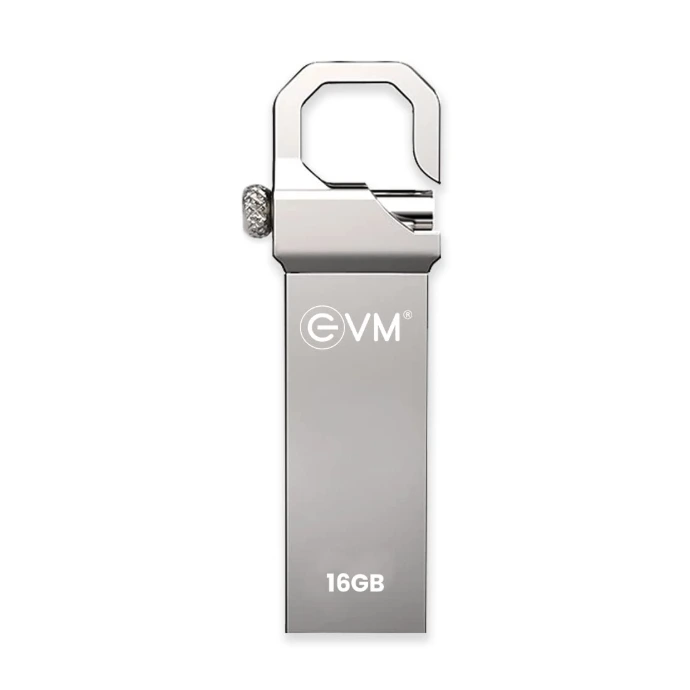
This is an affiliate product.
6. English-Language Targeting and Zero-Ad-Cost Monetization
Think School earns more per viewer than larger entertainment channels because of two audience targeting rules:
- English Language for High-Income Viewers: Making videos in Indian English captured urban South Indian viewers and working professionals. As a result, 60% to 70% of viewers are over age 25, and 30% watch from outside India (such as the US, UK, and UAE) (Masters' Union Masterclass).
- Zero-Ad-Cost Course Funnel: By naming the channel Think School instead of using his own name, Ganesh built a school brand that professors at IIM Bangalore play in class. A one-second text link in their YouTube videos has driven 47,000+ paid students to buy their Communication Masterclass at ₹2,999 ($36) (thethinkschool.com).
Verified Revenue Breakdown:
- Course Sales: 47,000+ students at ₹2,999 equals Estimated Earning: $1,680,000 (₹14+ Crore in gross course sales and annual revenue benchmarks per YouTube Case Study Analysis), plus ₹10,000 ($120) per seat from 120-founder offline Quick Commerce Accelerators.
- Brand Sponsorships: Because 60%–70% of viewers are 25+ earners, brands pay up to ₹10 lakh ($12,000) per 60-second ad read and ₹30–40 lakh (Estimated Earning: $36,000 to Estimated Earning: $48,000) for multi-video campaigns that have returned ₹1.1–1.2 Crore in sales (260% ROAS on Skillshare).
- YouTube AdSense & Channel Income: Third-party trackers estimate total monthly YouTube channel income at Estimated Earning: $75,000 to Estimated Earning: $102,700 (with 30-day baseline AdSense tracked at Estimated Earning: $6,248 to Estimated Earning: $8,560 on HypeAuditor and Estimated Earning: $10,200 on Youtubers.me).